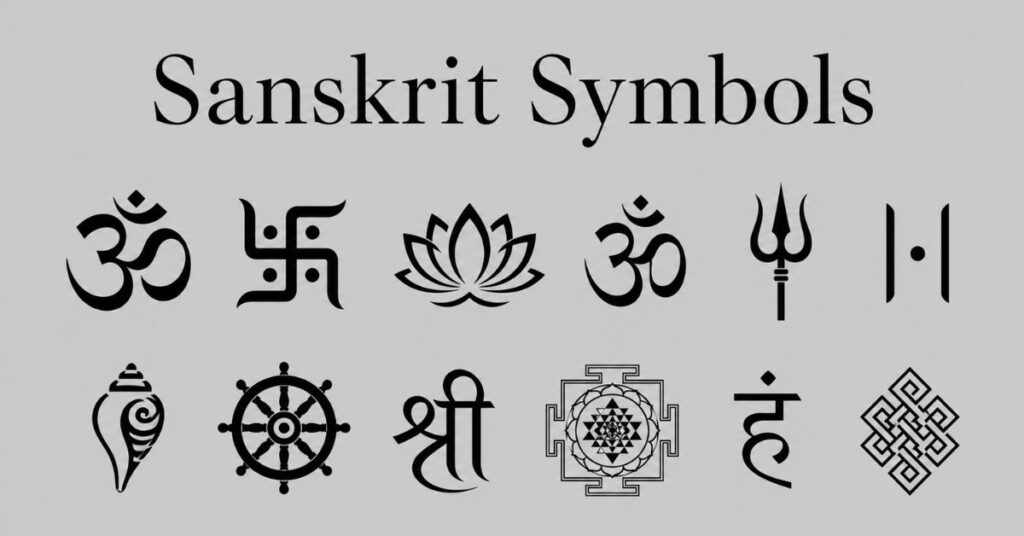
Sanskrit symbols have quietly made their way from ancient temple walls into modern tattoo studios, yoga studios, and social media feeds. They appear on jewelry, wall art, and even smartphone wallpapers. But what exactly makes these symbols so magnetic? The answer lies in their depth. Each Sanskrit symbol carries centuries of spiritual wisdom, philosophical meaning, and transformative energy. Whether you are drawn to them for meditation, body art, or simply personal growth, understanding these symbols can genuinely shift how you see yourself and the world.
What Are Sanskrit Symbols?
Sanskrit symbols are sacred visual emblems rooted in Saṃskṛtam, one of the oldest documented languages on Earth, with origins dating back more than 3,500 years in the Vedic scriptures of ancient India. What sets Sanskrit apart from ordinary writing systems is that its characters are not just phonetic representations. They are spiritual tools believed to carry vibrational energy that can influence consciousness, emotion, and inner awareness.
Each symbol encodes philosophical, cosmic, and spiritual principles in a compact visual form. Historically, these symbols were carved into temple architecture, inscribed in sacred manuscripts, and used during religious rituals across Hinduism, Buddhism, and Jainism. Today, they continue to guide people seeking deeper meaning, mindfulness, and connection to something larger than everyday life.
Sanskrit letters are also associated with deities, planets, and energies, and their interpretations have been used in healing practices, astrology (Jyotisha), and even numerology (Sankhya philosophy).
Ancient Sanskrit Symbols And Their Spiritual Meanings
Sanskrit Symbols And Meanings
Every Sanskrit symbol carries a unique meaning tied to spirituality, emotions, or personal growth. Some of the most recognized Sanskrit words used as symbols include:
- Om (ॐ) represents the primordial sound of the universe
- Shanti (शान्ति) means peace and tranquility
- Dharma (धर्म) represents duty, righteousness, and moral order
- Karma (कर्म) reflects the law of cause and effect
- Moksha (मोक्ष) means liberation or release
- Ahimsa (अहिंसा) stands for non-violence and universal compassion
- Satya (सत्य) means truth and honesty
- Ananda (आनंद) represents divine bliss and inner joy
These sacred signs remind people to live with intention, purpose, and awareness every single day.
Read More: 45+ Legendary Leadership Symbols From History That Still Guide Leaders Today
Buddhist Sanskrit Symbols And Meanings
Many Buddhist traditions use Sanskrit symbols to express core spiritual teachings. The most revered include:
Om Mani Padme Hum is the most famous Buddhist mantra in Sanskrit, roughly translating to “the jewel in the lotus.” Each of its six syllables is believed to purify a negative quality such as pride, jealousy, or desire, gradually transforming them into wisdom. It is the mantra of Avalokiteshvara, the Bodhisattva of Compassion.
Dharmachakra (the Wheel of Dharma) features eight spokes representing the Buddha’s Eightfold Path to liberation. Unalome is a curling spiral that slowly straightens into a line, representing the winding human journey toward enlightenment. It is widely used in temples across Thailand, Cambodia, and Myanmar.
Ancient Sanskrit Symbols

Ancient Sanskrit symbols were used in manuscripts, stone carvings, temple architecture, and sacred rituals. They served as visual bridges between the divine and the earthly world. Symbols like the Shri Yantra, a complex geometric design used for Shakti worship, and the Swastika in its original pre-distorted sacred meaning, have been found in archaeological sites thousands of years old across South Asia.
These symbols represent universal truths such as creation, preservation, destruction, and spiritual liberation, concepts central to Vedic philosophy.
Sanskrit Symbol For Life
The Sanskrit symbol most closely associated with life is Prana (प्राण), meaning “vital life force” or “breath energy.” Prana is considered the bridge between the physical body and spiritual consciousness. It reflects vitality, creation, and the living connection between body, mind, and soul. Many people choose this symbol in jewelry or art as a reminder to live with presence and gratitude.
Sanskrit Symbols For Breathe
The most direct Sanskrit symbol connected to breath is Pranayama (प्राणायाम), combining prana (life force) and ayama (extension or control). Another deeply meaningful breath symbol is Hamsa (हंस), which in Sanskrit represents the sound of breathing itself. “Ham” reflects inhalation and “sa” reflects exhalation. It is said that every human unconsciously chants this sacred mantra approximately 21,600 times per day through the simple act of breathing. When worn as a tattoo or kept as a reminder, Pranayama encourages people to honor each breath as a sacred act.
Popular Sanskrit Symbols In Tattoos And Modern Design
Sanskrit Symbols Tattoos

Sanskrit tattoo culture has grown significantly across the West, South Asia, and East Asia over the past decade. This growth is driven by yoga culture, global mindfulness movements, and a shared human desire for meaningful body art. People are drawn to Sanskrit tattoos not for decoration alone, but as daily reminders of deeper truths they want to carry with them.
Sanskrit Symbols And Meanings Tattoos
Understanding the meaning of a symbol before committing it to skin is essential. Sanskrit symbols carry specific cultural and spiritual weight. A lotus tattoo on someone who has genuinely risen through hardship carries entirely different energy than the same design chosen purely for aesthetics. Popular tattoo choices include Om, Unalome, Lotus, Ahimsa, Shanti, and individual chakra symbols.
Read More: 60+ Mysterious Filipino Symbols and Their Hidden Meanings You’ve Never Noticed
Spiritual Sanskrit Symbols
Spiritual Sanskrit symbols are widely used for meditation, yoga, and mindfulness practices. The most actively used include:
- Shri Yantra: A complex geometric tool for connecting with divine feminine energy (Devi or Shakti)
- Om: Chanted at the beginning and end of all Hindu rituals and yoga practices
- Gayatri Symbol: The visual representation of the Gayatri Mantra, invoking divine illumination
- Chakra Symbols: Used in chakra healing, kundalini yoga, and energy medicine
Sanskrit Symbols Text
Sanskrit symbols are commonly used in digital art, social media posts, decorative quotes, and creative typography. Their unique visual form gives written content an artistic and spiritual depth that modern design often lacks. Many creators and brands incorporate Devanagari script to add cultural authenticity and symbolic meaning to visual projects.
Symbols Of Sanskrit
Sanskrit symbols represent more than language. They reflect ancient knowledge, sacred cosmology, and a philosophical way of seeing reality. Even in their written form, Sanskrit characters are considered divine vibrations, and the act of writing them is viewed as a spiritual practice in itself.
Sanskrit Symbols Meaning
Each symbol carries layered meanings that operate on multiple levels simultaneously: phonetic, spiritual, emotional, and philosophical. This multilayered quality is what makes Sanskrit symbols so enduringly powerful across different cultures and time periods.
Sanskrit Symbol For Balance
The Sanskrit symbol for balance reflects harmony between the mind, body, and spirit. Samanjasya (सामंजस्य) is the word for harmony and balance. This concept is deeply connected with yoga, Ayurveda, and peaceful living. It reminds people to stay centered and emotionally grounded even during challenging moments.
Breathe Sanskrit Symbol

The breathe Sanskrit symbol, rooted in Pranayama, is especially popular among people practicing meditation and self-healing. When inscribed as art or worn as a tattoo, it serves as a constant prompt to slow down, breathe consciously, and reconnect with the present moment.
Deep Symbolic Meaning
Sanskrit symbols operate on multiple dimensions of meaning at once. Their visual form is intentional; every curve, line, and dot holds significance. Their sound vibration, when chanted or meditated upon, is believed to activate specific states of consciousness. And their philosophical meaning connects the individual self to universal truths about existence, impermanence, and liberation.
This depth is precisely why Sanskrit symbols feel timeless. They do not belong to a trend or era. They belong to something older and wider than any single culture or generation.
Types and Variations of Sanskrit Symbols
Om Symbol
Om (ॐ) is the most universally recognized Sanskrit symbol. It represents the primordial sound from which the universe was created. The three phonetic components, A, U, and M, correspond to waking state (jagrat), dream state (svapna), and deep sleep (sushupti). The silence that follows the chant represents pure consciousness (turiya). Om is chanted at the opening and close of nearly every Hindu ritual, mantra, and yoga class worldwide.
Lotus Symbol
The lotus grows from muddy water yet blooms into a perfect flower without absorbing any of the mud below. This makes it one of the most powerful symbols of spiritual transcendence and inner purity in both Hindu and Buddhist traditions. During meditation, practitioners are encouraged to envision themselves as the lotus, rising above difficulty while remaining untouched by it.
Swastika Symbol
The original Sanskrit Swastika (स्वस्तिक) means “wellbeing” and “good fortune.” It is an ancient sacred symbol of auspiciousness used across Hinduism, Buddhism, and Jainism for thousands of years before its meaning was distorted in the 20th century. In its original context, it represents the sun, prosperity, and the eternal cycle of life. Its cultural and spiritual reclamation is an important ongoing conversation.
Chakra Symbols
The word chakra literally means “wheel” in Sanskrit. The seven main chakras represent spinning energy centers along the spine, each associated with specific body parts, emotions, colors, and mantras. From the root chakra (Muladhara) representing safety, to the crown chakra (Sahasrara) representing divine consciousness, chakra symbols are used in yoga, healing, and kundalini practices as maps of the body’s spiritual anatomy.
Mandala
A mandala is a sacred geometric design representing the cosmos, wholeness, and the journey inward. The word mandala comes from Sanskrit and means “circle.” In Tibetan Buddhist practice, monks spend days creating intricate sand mandalas as a meditation on impermanence, then destroy them upon completion. In modern use, mandalas appear in art therapy, tattoos, and home decor as symbols of unity, focus, and spiritual completeness.
Sanskrit Symbols Across Cultures
Sanskrit symbols have crossed the boundaries of their origin in India and taken root across the globe. The lotus appears in ancient Egyptian art. Om is chanted in Buddhist temples across Japan, China, Tibet, and Thailand. Chakra systems have been adopted in New Age healing communities throughout Europe and North America.
The Unalome appears in Southeast Asian Buddhist iconography. This cross-cultural resonance points to something universal in these symbols, a shared human longing for meaning, peace, and connection.
Sanskrit Symbols in Art, Movies and Pop Culture
Sanskrit symbols have made significant appearances in mainstream media and popular culture. Films like “Doctor Strange” feature Mandala-inspired visuals. The Om symbol is a staple of yoga-themed merchandise worldwide. Artists like Katy Perry and Rihanna have worn Sanskrit-inspired jewelry.
anskrit script appears in fashion lines, tattoo art exhibited in galleries, and digital art collections. This visibility has both widened appreciation and raised important conversations about cultural sensitivity and respectful engagement with sacred symbols.
Spiritual and Dream Meaning of Sanskrit Symbols
When Sanskrit symbols appear in dreams, many spiritual traditions interpret this as a sign of inner awakening or a message from deeper consciousness. Dreaming of the Om symbol may suggest a period of spiritual clarity is approaching. A lotus in dreams often signals personal growth emerging from difficulty.
Chakra symbols in dreams are sometimes interpreted as a call to balance a particular area of life, whether emotional, physical, or spiritual. While dream interpretation is personal, Sanskrit symbols in the dream space are generally regarded as auspicious signs.
Positive vs Negative Meaning
The vast majority of Sanskrit symbols carry profoundly positive meanings rooted in love, peace, truth, and liberation. However, context matters enormously. The Swastika serves as the clearest example of how a deeply sacred symbol can be stripped of its positive meaning through misuse.
Understanding the original intent and cultural context of each symbol prevents misrepresentation. When used with knowledge and respect, Sanskrit symbols are overwhelmingly positive forces for inner growth, healing, and spiritual awareness.
Why Humans Are Attracted to These Symbols
Human beings are pattern-seeking, meaning-hungry creatures. Sanskrit symbols offer both. They are visually beautiful, geometrically precise, and philosophically rich. They carry the weight of thousands of years of human seeking, prayer, and wisdom. In an age of digital noise and surface-level communication, Sanskrit symbols offer something rare: depth.
They give people a way to anchor personal values, spiritual intentions, and life philosophies into something visible and tangible. Whether worn on the skin, placed on an altar, or used in meditation, these symbols serve as mirrors reflecting the best and highest version of the person who chooses them.
FAQ’s
What is the most popular Sanskrit symbol?
Om (ॐ) is the most widely recognized Sanskrit symbol worldwide, representing the primordial sound of the universe.
What does the Sanskrit symbol for strength look like?
Bala (बल) is the Sanskrit word for strength, written in Devanagari script and popular in tattoo and jewelry design.
Are Sanskrit symbols religious?
They are rooted in Hinduism, Buddhism, and Jainism but are widely used across cultures as spiritual and philosophical guides.
Is it disrespectful to get a Sanskrit tattoo?
Not inherently. Understanding the symbol’s meaning and approaching it with genuine respect is what matters most.
What Sanskrit symbol represents love?
Prem (प्रेम) is the Sanskrit word for love and is one of the most popular choices for tattoos and meaningful jewelry.
What is the Sanskrit symbol for peace?
Shanti (शान्ति) is the Sanskrit word and symbol for peace, commonly used in meditation, yoga, and spiritual practices.
Can anyone use Sanskrit symbols?
Yes. Sanskrit knowledge belongs to all of humanity. Respectful, informed use is encouraged across all backgrounds and traditions.
Conclusion
Sanskrit symbols are far more than decorative patterns or ancient relics. They are living tools for transformation that have guided human beings toward peace, wisdom, and self-awareness for over three millennia. From the cosmic resonance of Om to the quiet perseverance of the Lotus, each symbol tells a story and carries an invitation.
The invitation is to look deeper, breathe more consciously, live more intentionally, and connect with something greater than the everyday rush of life. In 2026, as the world moves faster than ever, these ancient symbols offer something priceless: stillness, meaning, and the reminder that some truths never go out of style.

Daniel Wilson is the admin of Meaning Lexi, a website focused on the meanings of words, names, phrases, and symbols. He is dedicated to providing clear, accurate, and easy-to-understand content for readers.