Leadership symbols have shaped human civilization for thousands of years. From the pharaoh’s golden crook to the eagle carved into Roman battle standards, these powerful icons have always done one thing: made authority visible. Every culture across every era created its own visual language of power, and remarkably, those same symbols still appear in boardrooms, national flags, military badges, and corporate logos today. They are not relics. They are living tools of influence.
Understanding these symbols means understanding how leadership itself works. They tap into something deeper than logic, reaching directly into human emotion, identity, and instinct. Whether you are a historian, a designer, a business leader, or simply curious, the story of leadership symbols is ultimately the story of how humans organize, inspire, and follow one another.
What Are Leadership Symbols?
A leadership symbol is any object, animal, image, or design that a society collectively recognizes as a marker of authority, strength, or guidance. These symbols work instantly. When someone sees a crown, a lion, or a staff, the message of power is understood without a single word spoken.
Leadership symbols are not just decorative. They carry deep psychological weight. Research in behavioral psychology confirms that images and symbols move people in ways that words alone cannot. They tap into emotions, memories, and cultural identity. This is why a flag can move soldiers to tears, or why a crown still makes us think of royalty, even centuries after kingdoms have faded.
Throughout civilization, leaders have used symbols to legitimize their rule, inspire loyalty, and separate themselves from the people they governed. The core purpose has never changed: to make leadership visible, believable, and respected.
Leadership Symbols And Meanings Across Cultures And History
Symbols Of Leadership With Meaning
Every culture has given its leaders visual markers that communicate authority. A crown signals rulership. A torch signals guidance. A scale signals justice. A compass signals direction. These meanings are not random. They grew out of each civilization’s deepest values.
A lion represents raw courage and nobility across dozens of cultures. An eagle represents vision and divine favor. A scepter represents the right to command. These associations developed independently in cultures separated by thousands of miles, because they all recognized the same fundamental qualities of great leadership.
Symbols Of Leadership In Education
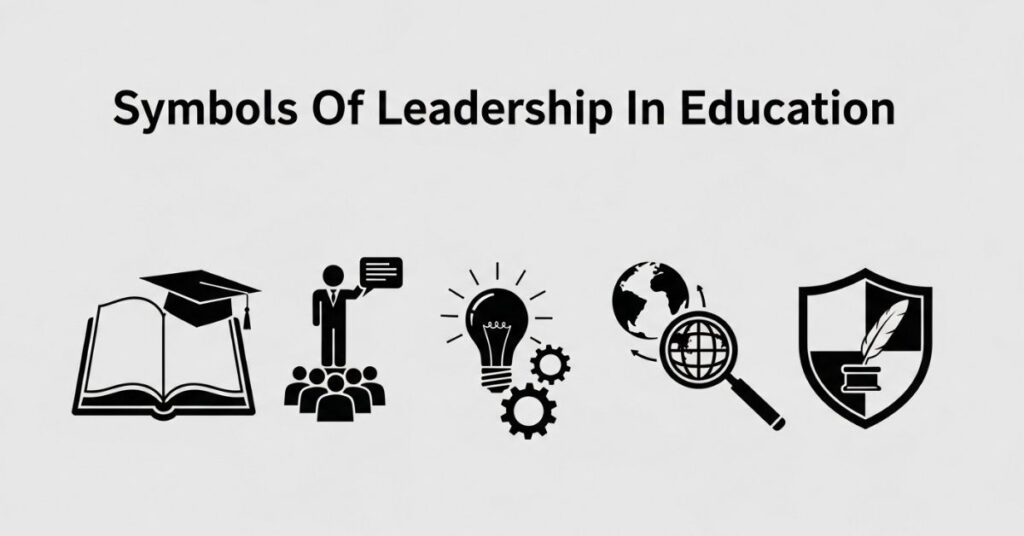
Education has borrowed heavily from leadership symbolism. The graduation cap and gown echo medieval academic robes worn by scholars who were treated as community leaders. The torch is used by universities worldwide to represent the passing of knowledge from one generation to the next. The eagle appears in countless school emblems because it represents vision, ambition, and rising above challenges.
These educational symbols remind students that learning is a form of leadership preparation. The same imagery that once adorned thrones and battle standards now decorates diplomas and school crests.
Symbols Of Leadership
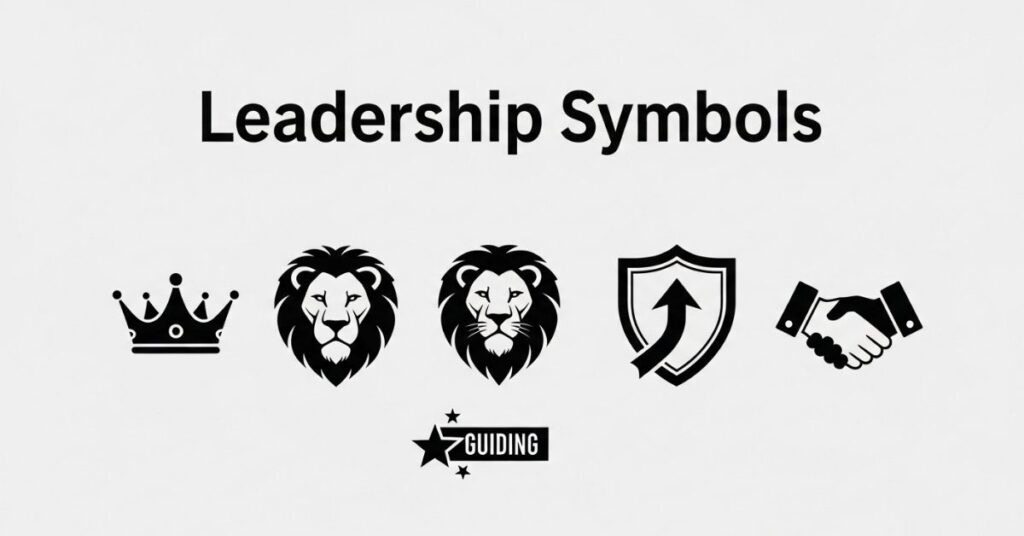
The most universally recognized leadership symbols include the crown, the lion, the eagle, the throne, the staff, the flag, and the laurel wreath. These appear across every culture and historical era. They share common visual traits: bold silhouettes, natural imagery, and instant readability. Whether carved into stone 3,000 years ago or printed on a corporate logo today, they communicate authority without explanation.
Visual And Creative Leadership Symbol Designs
Symbol Of Leadership Images
When searching for leadership symbol images, the most recognizable visuals include the crown, the roaring lion, the soaring eagle, the laurel wreath, the torch, and the compass. These appear across websites, books, presentations, and branding because they tap into universal human psychology around strength and guidance.
Pictures Of Leadership Symbols
Pictures of leadership symbols often show animals, royal objects, or cultural icons connected with power. People use such images in teaching, branding, and motivational content. They communicate ideas faster than text and create instant emotional responses in viewers.
Leadership Symbols Images
Leadership symbol images are widely used in corporate design, educational materials, and public communication. They help express leadership values visually and make abstract qualities like courage, integrity, and vision tangible and recognizable at a glance.
Leadership Symbols Black And White
In black and white design, leadership symbols gain a timeless and authoritative quality. Tattoos, logos, and emblems often strip away color to reveal the pure power of a symbol’s shape. A black crown, a white eagle against darkness, or a minimal lion outline carries extraordinary visual weight. The absence of color removes distraction and forces the symbol to communicate through form alone.
Leadership Symbols Clip Art
Leadership clip art symbols are widely used in presentations, educational worksheets, and digital content. Common options include crown icons, eagle silhouettes, shield designs, torch illustrations, and star badges. These simplified graphic versions make leadership concepts accessible and easy to reproduce across different media.
Read More: 60+ Mysterious Filipino Symbols and Their Hidden Meanings You’ve Never Noticed
Leadership Symbol Designs In Art And Personal Expression
Leadership Symbol Drawing
Artists and designers have long used leadership symbols as subject matter. Drawing a crown, an eagle in flight, or a lion mid-roar is an exercise in communicating power through line and form. In illustration, elevated positioning, strong postures, and upward-facing subjects all reinforce the idea of leadership visually.
Leadership Symbol Tattoo

Leadership symbol tattoos are popular among those who want a permanent reminder of their values and ambitions. Common choices include the lion for courage, the eagle for vision, the crown for authority, the compass for direction, and the anchor for stability. These tattoos are deeply personal, often chosen to mark a life transition, a professional milestone, or a commitment to a personal philosophy of leadership.
Logo Leadership Symbols
Corporations and organizations regularly use leadership symbols in their logos. The lion appears in hundreds of financial institution logos. The eagle is used by governments and military organizations worldwide. The star represents excellence and aspiration in countless brand identities. These symbols communicate strength and trustworthiness to audiences instantly, which is why companies invest heavily in choosing the right visual identity.
Historical And Cultural Leadership Symbols
Ancient Symbols Of Leadership

Ancient leadership symbols appear in almost every early civilization. The Ankh in Egypt represented life and divine authority. The fasces in Rome symbolized collective strength and imperial power. Zeus’s thunderbolt in Greece represented commanding force and divine right. The dragon in China signified imperial power and cosmic control.
Native American petroglyphs, some dating back to 3000 BC, also preserved leadership symbols. A horizontal baseline with a vertical center line and two V shapes represented a person with the wisdom to lead. Visual leadership symbolism is among humanity’s oldest forms of communication.
Ancient Leadership Symbols
The crook and flail of the Egyptian pharaoh, the laurel wreath of Greek commanders, and the jade imperial seal of Chinese emperors are among the oldest leadership markers ever recorded. Each culture developed its own visual vocabulary, but the shared message was always the same: this person has the authority and responsibility to guide the group.
Coat Of Arms Leadership Symbols
Medieval coats of arms were complex leadership symbols designed to communicate an entire family or institution’s values at a glance. Shields, crowns, animals, banners, and mottos were combined into visual identities that functioned as both identification in battle and statements of authority in peace. Lions, eagles, and bears appeared frequently because they represented the qualities kings and nobles wished to project: strength, courage, and vigilance.
Objects And Things That Represent Leadership
Objects That Represent Leadership
Physical objects that have historically represented leadership include crowns, scepters, thrones, swords, orbs, flags, gavels, and staffs. Each object carries specific meaning. The crown represents authority, the scepter represents the right to rule, the sword represents decision-making power, and the gavel represents the final word in judgment.
Objects That Represent Leadership Styles
Different objects also communicate different leadership styles. A compass suggests a visionary or strategic leader who sets direction. A shepherd’s crook suggests a servant leader who supports and guides others. A sword suggests a decisive, authoritative leader. A torch suggests an inspirational leader who illuminates the path for others.
Items That Represent Leadership
Beyond royal regalia, everyday items have taken on leadership symbolism. The captain’s wheel represents navigating through uncertainty. The chess king represents strategic command. The podium represents the authority to speak and be heard. The graduation cap represents leadership through knowledge and expertise.
Things That Symbolize Leadership
In nature, the mountain represents the leader who stands above, offering perspective. The oak tree represents the leader who is deeply rooted, enduring, and strong enough to shelter others. The river represents the leader who flows persistently toward a goal, adapting to obstacles without losing direction.
Things That Represent Leadership
Leadership can be represented by actions as much as objects. Nelson Mandela’s refusal to compromise his values became a symbol of moral leadership more powerful than any crown. Gandhi’s spinning wheel was a humble object that became an emblem of self-reliance and resistance. The most enduring leadership symbols are those connected to real human stories of courage and sacrifice.
Leadership Symbols In Power, Strength, And Control
Leader Symbols

Leader symbols communicate three things: authority, responsibility, and identity. The most effective leadership symbols are simple enough to be instantly recognized but layered enough to carry deep meaning over time. A single lion’s head on a crest communicates courage, nobility, and pride simultaneously.
Symbol Of A Leader
The single most universal symbol of a leader throughout history is the crown, followed closely by the scepter and the throne. These three objects together created a visual language of legitimate rule that transcended language barriers and cultural differences.
Symbol Of Leader
A leader’s symbol must do more than announce power. It must inspire trust. This is why the best leadership symbols blend strength with purpose: an eagle carries not just power but vision. A shepherd’s staff carries not just authority but care.
Symbol For Leadership
The compass has emerged as one of the most relevant modern symbols for leadership. It represents the ability to set direction, maintain orientation through confusion, and guide others toward a destination they cannot yet see.
Symbols For Leadership
Symbols commonly used for leadership today include the compass, the mountain, the lighthouse, the chess king, the torch, the shield, and the laurel wreath. Each captures a different dimension of what it means to lead effectively in the modern world.
Symbols That Represent Leadership
The symbols that most consistently represent leadership across cultures and centuries are those connected to vision, strength, and service. The eagle sees far. The lion acts with courage. The shepherd protects the flock. These three qualities form the foundation of what humanity has always expected from its leaders.
Leadership Symbolism
Leadership symbolism functions as a universal language. It transcends literacy, language barriers, and time periods. A symbol used by an Egyptian pharaoh 3,000 years ago still communicates authority today because it connects to something deeply human. We are wired to recognize and respond to visual markers of power and guidance.
Symbolism For Leadership
Modern organizations use leadership symbolism consciously and deliberately. A startup’s logo, a military badge, a school seal, and a national flag all employ the same ancient principles: use a powerful image, make it instantly readable, and tie it to values people believe in.
Specialized Leadership Symbol Categories
Symbols That Represent Control
The symbols most associated with control and decisive authority include the scepter, the throne, the gavel, the crown, and military rank insignia. Each represents not just power but the legitimate and recognized right to exercise it.
Strength Leadership Symbols
The lion, the thunderbolt, the eagle, the bear, and the mountain are the most recognized symbols of leadership through strength. They appear in military insignia, national emblems, and sports team logos precisely because strength and leadership have always been associated in human culture.
Military Leadership Symbols

Military leadership symbols include medals, rank insignia, regimental colors, eagles, thunderbolts, and shields. In ancient Greece, commanders wore olive leaf wreaths. Medieval knights carried personal heraldic devices into battle. Today, military officers wear rank badges that communicate instantly who holds authority in any situation.
Servant Leadership Symbols
Servant leadership is symbolized by the shepherd’s crook, the basin and towel (from the story of Jesus washing his disciples’ feet), the open hand, and the bridge. These symbols communicate that true leadership means placing the needs of others above your own position or comfort.
Leadership Symbols Animals
Animals have been among the most powerful leadership symbols across every culture. The lion represents courageous authority. The eagle represents visionary perspective. The wolf represents collaborative pack leadership. The elephant represents wise and memory-rich elder leadership. The dragon in Asian traditions represents divine imperial power. The bear represents protective and fierce parental leadership.
Deep Symbolic Meaning of Leadership Symbols
Spiritual Meaning
Across spiritual traditions, leadership symbols carry sacred significance. The ankh connected Egyptian rulers to divine life force. The crook and flail of the pharaoh mirrored the tools of the divine shepherd. The Christian bishop’s staff echoes the shepherd imagery of sacred texts. Leadership in many traditions is understood as a divine calling, and the symbols reflect that belief.
Psychological Meaning
Psychologically, leadership symbols work by activating deeply held associations between visual images and emotional states. A crown triggers feelings of awe and authority. A torch triggers feelings of hope and guidance. Research in Jungian psychology suggests these responses are partly archetypal: they are wired into the human psyche through thousands of years of cultural reinforcement.
Cultural Meaning
Culturally, leadership symbols define who belongs to a group and who speaks for it. A flag is not just cloth. A seal is not just wax. These objects carry the accumulated weight of every event, decision, and sacrifice made under their authority. Destroying a leader’s symbols has always been one of the first acts of revolution, because symbols are power made visible.
Types and Variations of Leadership Symbols
Crown
The crown is the single most recognizable leadership symbol in human history. It represents not just power but the weight of responsibility that comes with it. Crowns appear in ancient Egypt, medieval Europe, Asian kingdoms, and modern ceremonial contexts worldwide.
Lion
The lion embodies courage, strength, and nobility. It appears in the royal emblems of England, Scotland, Norway, Ethiopia, and dozens of other nations. The lion’s combination of raw power and calm confidence makes it the ideal animal embodiment of leadership.
Eagle
The eagle represents vision, freedom, and divine favor. It was the symbol of the Roman legions, the Holy Roman Empire, the United States, and many other major powers. The eagle’s ability to soar high above ordinary perception makes it a natural symbol for the leader who must see beyond immediate challenges.
Throne
The throne represents the seat of power, both literally and figuratively. An elevated, ornately decorated throne communicated that its occupant stood above ordinary people and bore special responsibility for their welfare. In modern contexts, the corner office or the head of the boardroom table serves the same symbolic function.
Staff or Scepter
From Moses to shepherd kings to Roman magistrates, the staff has symbolized leadership for thousands of years. It guides those ahead, supports those who struggle, and marks the leader’s presence. The shepherd’s crook became one of the most enduring leadership symbols in religious tradition.
Flag
Flags tell people where they belong and what they stand for. In battle, soldiers followed their flag through chaos. In modern organizations, a strong flag gives people something larger than themselves to unite around and work toward.
Leadership Symbols Across Cultures
Ancient Egypt
Egyptian leadership symbols included the pharaoh’s crook and flail, the ankh, the double crown, and the sphinx. The pharaoh was considered a divine ruler, a living god, and every symbol he carried reflected this sacred authority. The Eye of Horus represented divine protection and watchful governance.
Ancient Greece
Greek leaders used the laurel wreath, the thunderbolt, the olive branch, and the owl. Military commanders were awarded laurel wreaths to mark their victories. The owl of Athena became the symbol of wise and just governance. The olive branch represented the peaceful authority of diplomatic leadership.
China
Chinese emperors used the dragon, the jade imperial seal, and the color yellow as exclusive markers of imperial authority. The dragon represented divine cosmic power. The imperial seal validated all official documents and decisions. No one but the emperor could use these symbols without risking death.
Medieval Europe
Medieval European leaders used coats of arms, crowns, scepters, thrones, and heraldic animals. The lion and the eagle dominated medieval heraldry because they communicated the twin virtues most admired in medieval rulers: courageous strength and far-seeing wisdom.
Modern Society
Modern leadership symbols include the presidential podium, corporate logos, military rank badges, championship trophies, and national flags. These serve the same purpose as ancient symbols: they make authority visible, credible, and emotionally compelling to those who recognize them.
Leadership Symbols in Art, Movies and Pop Culture
Pop culture has kept leadership symbolism alive and relevant for new generations. King Arthur’s Excalibur represents legitimate authority earned through worthiness, not birthright. Aragorn’s return to the throne in The Lord of the Rings dramatizes the restoration of rightful leadership. The Iron Throne in Game of Thrones uses the imagery of power to explore its corrupting potential.
In fine art, leaders have always been depicted with their symbols prominently displayed. Portraits of monarchs show crowns and scepters. Military paintings show flags and medals. These visual conventions communicate status and authority without a word of explanation.
Corporate and political branding draw directly from this tradition. Campaign logos borrow eagle imagery, star symbolism, and torch iconography because these symbols carry centuries of established meaning that audiences respond to instinctively.
Spiritual and Dream Meaning of Leadership Symbols
When leadership symbols appear in dreams, they are often interpreted as messages about the dreamer’s own authority and responsibility. Dreaming of wearing a crown may suggest that the dreamer is being called to step into a leadership role or accept greater responsibility. Dreaming of an eagle may suggest that the dreamer needs to rise above current circumstances and take a broader perspective.
In many spiritual traditions, leadership symbols also appear as signs of divine calling. The appearance of a lion in a vision has been interpreted across cultures as confirmation that the viewer has been chosen for a role of courage and protection.
Positive vs Negative Meaning of Leadership Symbols
Positive Meaning
Leadership symbols carry overwhelmingly positive meanings when associated with service, vision, and courage. The crown represents the dignity of responsible authority. The eagle represents the clarity of far-sighted vision. The shepherd’s staff represents the compassion of servant leadership. These symbols inspire and motivate because they connect to humanity’s highest ideals about what leaders can and should be.
Negative Meaning
The same symbols can carry negative meanings when associated with tyranny, corruption, or abuse of power. A crown worn by a tyrant becomes a symbol of oppression. A throne built on injustice becomes a symbol of exploitation. This is why revolutionary movements have always targeted leadership symbols first: destroying a crown or toppling a statue removes the visible proof of authority’s legitimacy. The symbol’s power cuts in both directions.
Why Humans Are Drawn to Leadership Symbols
Humans are social animals who have always needed to quickly identify who holds authority in any group. Leadership symbols evolved to make this identification instant, reliable, and emotionally compelling. They work because they tap into deep psychological patterns built up over thousands of years of social organization.
Beyond practicality, leadership symbols give people something to believe in. A flag is not just a piece of cloth. A crown is not just metal and jewels. These objects become vessels for hope, identity, loyalty, and collective purpose. They remind people that they belong to something larger than themselves, and that someone has accepted the responsibility of guiding the group forward.
This is why leadership symbols persist even in the most rational, secular, and modern societies. The need to make authority visible and emotionally meaningful is not a primitive leftover. It is a fundamental feature of human social life.
FAQ’s
What is the most universal symbol of leadership?
The crown is the single most universal leadership symbol in human history, recognized across nearly every culture as a mark of authority and responsibility.
What animals symbolize leadership?
The lion, eagle, wolf, elephant, and dragon are the most common animal symbols of leadership, each representing different qualities like courage, vision, and wisdom.
What does a compass symbolize in leadership?
A compass represents direction-setting and vision, qualities of a leader who guides others through uncertainty toward a clearly defined goal.
What is a servant leadership symbol?
The shepherd’s crook and the open hand are the most recognized symbols of servant leadership, representing a leader who guides and supports rather than commands.
Why do military organizations use leadership symbols?
Military symbols like rank insignia and regimental flags create instant recognition of authority in high-stakes situations where clear command structures are essential.
What do leadership symbols in dreams mean?
Dreaming of a crown or eagle often suggests a calling to step into greater responsibility or to elevate your perspective on a current challenge.
How are leadership symbols used in modern branding?
Companies use eagles, lions, crowns, and stars in logos because these symbols carry centuries of established meaning around strength, trust, and authority.
Conclusion
Leadership symbols have guided human civilization for thousands of years. From the pharaoh’s crook and flail to the corporate eagle logo, these symbols make authority visible, inspire loyalty, and communicate values that words alone cannot capture.
The most enduring leadership symbols share a common quality: they connect individual authority to something larger than any single person. The crown represents not just the king but the idea of just governance. The eagle represents not just one nation but the aspiration of freedom and vision. The lion represents not just one ruler but the universal ideal of courageous strength in service of others.
Understanding these symbols helps modern leaders recognize the deep human need for meaning and identity in any organization. Whether you wear a badge, carry a title, or simply choose a logo for your team, you are participating in a tradition of leadership symbolism as old as human civilization itself.

Daniel Wilson is the admin of Meaning Lexi, a website focused on the meanings of words, names, phrases, and symbols. He is dedicated to providing clear, accurate, and easy-to-understand content for readers.